





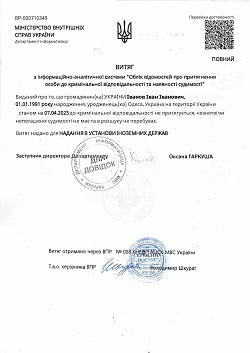
A police clearance certificate is an official document issued by the state that contains information about a person's criminal record. This document is often required for various reasons, such as employment, immigration, or travel. However, when the certificate must be presented in another country where a different language is used, it must be translated. In this article, we'll explain what a police clearance certificate is, when it needs to be solved, what you need to do to recognize it, and how to choose a reliable translation service provider.
Translation of a Police Clearance Certificate: What You Need to Know
A police clearance certificate is an official document that contains information about a person's criminal record. The document includes the person's name, birth date, and convictions or charges. It may also collect information about any previous arrests and any cautions or warnings received. Sometimes, the document may also contain information about expunged or pardoned convictions.
When do I Need a Police Clearance Certificate Translated Into Another Language?
If a person needs to present a police clearance certificate in another country where the official language is different from the one in which the certificate was issued, a translation is required. This is because the document must be written in a language understandable to the authorities in the other country.
There are many reasons why a person may need to present their police clearance certificate in another country. For example, if they get a job abroad or immigrate to another country. In some cases, the document may also be required for travel.
What must I do to Have My Police Clearance Certificate Recognized in Other Countries?
If you need to present a police clearance certificate in another country, there are several steps you need to take to have it recognized:
Step 1: Translation - The first step is to translate the document into the country's official language, where it will be presented. It is vital to use the services of a professional translator who is familiar with legal terminology and has experience translating official documents.
Step 2: Notarization - Once the document is translated, it needs to be notarized. This means that the translator must take an oath that the translation is accurate, and their signature must be notarized.
Step 3: Legalization - The next step is to legalize the document. This involves its certification by the relevant government authorities both in the country where it was issued and where it will be presented. This process is often called an apostille.
Step 4: Authentication - In some cases, the document may also need to be authenticated by the embassy or consulate of the country where it will be presented. The paper must be certified by the relevant embassy or consulate.
It is important to note that the specific requirements for the translation and legalization of a police clearance certificate may differ depending on the country where it will be presented. Therefore, conducting thorough research and seeking advice from the relevant authorities is essential.
 How to Choose a Reliable Translation Agency and Legalize a Police Clearance Certificate
Choosing a reliable translation agency is crucial when translating a police clearance certificate. Here are some tips to help you choose a reliable translation agency:
Tip 1: Check for accreditation - look for a translator or translation agency accredited by a reputable organization such as the American Translators Association or the National Association of Court Reporters and Interpreters.
Tip 2: Experience - Choose a translator or agency with experience translating official documents such as police clearance certificates. This ensures that the translation will be accurate and that the document will be accepted by the authorities in another country.
Tip 3: Reviews and testimonials - Look for reviews and testimonials from previous clients to get an idea of the quality of their work and level of professionalism.
Once you have chosen a reliable translator, it is essential to ensure the police clearance certificate is legalized properly. Here are some tips to help you legalize the document:
Tip 1: Research - research the specific requirements for legalizing a police clearance certificate in the country where it will be presented. This will help you ensure you have all the necessary documents and complete the process correctly.
Tip 2: Use a professional service - Consider using a professional service to help you with the legalization process. Such services are often familiar with the specific requirements and can help you navigate the process more efficiently.
Tip 3: Plan - Translating and legalizing a police clearance certificate can take some time, so planning ahead and giving yourself enough time to complete the process is essential.
To order the translation and legalization of a police clearance certificate, we recommend using the services of professionals from Status Ko Translation Center, who will perform the work in compliance with all international standards. The cost of translation, legalization, and certification can be found here.
Conclusion
Thus, a police clearance certificate is an important document that may be required to be presented in another country. In such a case, the document must be translated, notarized, and legalized correctly to ensure its recognition by the authorities of another country. Choosing a reliable translator and following the steps for legalization is crucial to ensure the process is completed correctly and the document is accepted. By following the tips in this article, you can provide a successful translation and legalization of your police clearance certificate.